As with the museum posts(page) it really don't make sense search wise to name my book review posts book review # so I am going to go to naming them the title of the book for simplicities sake. Now on to the review.
It was a typical day in the Late Jurassic (Tithonian to be specific) on a small island located in the Tethys Ocean on what is currently the Bavarian region of Germany. The climate was warm and dry and the sun was beaming down on the small bush sized plants that covered the island. Out over the sea a group of pterosaurs (for me I will say Rhamphorhynchus muensteri) caught fish that swam to close to the surface near the reef while the breath of some of the marine reptiles (e.g. ichthyosaurs) broke the surface on occasion. On shore small theropod dinosaurs poked around in the bushes hoping to find a lizard or insect that they may be able to eat. The young Archaeopteryx had watched this scene play out plenty of times but only recently away from the safety of her mother's nest but at least now she could fly, well at least short distances and her flight wasn't very powerful due to her sternal keel still being cartilage. Her black feathers glistened in the sunlight and as a curious Compsognathus got too close she snapped her toothed jaw at it and flew slightly higher out of grasp for the dinosaur. She of course was a dinosaur too but there was something special about her she also had a lot of features that made her look more bird like than dinosaur like except for her long tail and her toothed "beak", and she certainly wasn't the first dinosaur to look bird-like but she would become when discovered one of the most important. As she looked out over the sea toward the dark black clouds that had been approaching for a while now she realized she was hungry it had been a while since she ate after all. Something hit her on the head and then more and more she wasn't quite sure what this was after all it hadn't rained, at least not much, her entire life. The rain drops also disturbed a dragonfly nearby from the branch it was sitting on and she took off after it. As she closed in a strong gust of wind blew her out over the reef, this was further out to sea than she had ever been. She looked toward shore and then the wind picked up even more. 150 million years later, in 1861, a slab of limestone is split from a quarry in the Solnhofen formation and she would again see the light of a new day but the world would be completely different than the one she lived in but she too would change it greatly.
While that story is clearly fictional the idea behind it is the vast amount of information that we have learned about Archaeopteryx lithographica since the first one was discovered in 1861. While most of this knowledge has been out there for years the first time that I truly saw it all compiled in one place was in a book I just finished called Archaeopteryx: The Icon of Evolution by Dr. Peter Wellnhofer (someone really needs to update and expand on his Wikipedia page). In this book we are taken to Solnhofen where we learn about the limestone that Archaeopteryx was deposited in and how this helps understand the environment that this animal lived in. We then learn about the animal itself and Dr. Wellnhofer tries to fit it into a phylogenetic location which includes a discussion on the different views of how birds evolved as well as the evolution of flight. While there have only been a total of ten (well eleven but the most recent one hasn't been published on yet and was just found late in 2011) body specimens and one isolated feather found we know so much about this animal. Part of the reason is how complete the specimens are with most being nearly complete but what I think the main reason for the amount we know about the animal is the just sheer amount of research that has been done on the specimens since it was the first animal found that truly showed the evolution of organisms in action, in this case the evolution of dinosaurs to birds.
This book is exceptionally well written and that is due to the sheer amount of knowledge that Dr. Wellnhofer has on paleontology and in particular the Solnhofen region. If you want to learn about Archaeopteryx or if you want to learn about Solnhofen geology or if you just want a book with really really nice pictures of really amazing fossils this is the book for you. Detailed images of all 10 of the specimens are included including pictures taken using infrared which really helps show off a lot of the soft tissue preserved in the specimen. There is a detailed description of the genus in general as well as where it fits evolutionarily which includes a very through description of the origin of birds including the many hypothesis of what the evolved from, and he, logically, leans toward them evolving from theropod dinosaurs. There is also a brief overview of the different ideas of how flight and feathers evolved and a basic overview of known, as of 2009, Mesozoic bird species.
If there is one fault in the book it is that it is too detailed. At times I felt like I was dredging through scientific papers, this is part of the reason it took me so long to finish, so if you aren't an expert in the field or haven't spent a lot of time reading scientific papers on dinosaur and bird evolution you might struggle a bit through parts. Most of the book is easily readable and the parts that are technical can be skipped or skimmed over without missing the overall point or theme of the section so don't let the technical nature scare you off. The price might scare you off but it is worth it for all the knowledge contained within.
The only other problem is that the book is dated which should say something about how fast the science has come since 2009. This is really that much of a problem after all how was Dr. Wellnhofer supposed to know that since I started reading the book early last year that phylogenetic studies would say that Archaeopteryx is not a bird (Naish et al., 2011; Xu et al. 2011), although at least one study disagrees (Lee & Worthy, 2011), that the color of the feathers would be determined (Carney et al., 2012), and that an even earlier feathered dinosaur would be discovered (Liu et al., 2012) (I got the e-mail about that last one as I was working on this review). So I will forgive the book seemingly being slightly dated since there are so many new specimens found in the paleontology world every year, there have been several new Mesozoic birds found in the past year (e.g. Xu et al., 2011).
This book is very interesting and worth picking up. It is a handy reference for the currently known specimens as well as about the evolution of birds in general. Oh and did I mention it has very awesome pictures, yeah they are very pretty. I will leave you, again, with a picture of the one specimen of Archaeopteryx that I have seen, the Thermopolis specimen, it was a great experience.
Book citation
Wellnhofer, P. 2009. Archaeopteryx: The Icon of Evolution. Verlag Dr. Friedrich Pfeil, Munchen, 208p.
References
Lee, M. S. Y., & T. H. Worthy. 2011. Likelihood reinstates Archaeopteryx as a primitive bird. Biology Letters doi: 10.1098/rsbl.2011.0884.
Liu, Y.-Q., Kuang, H.-W., Jiang, X.-J., Peng, N., Xu, H., & Sun, H.-Y. 2012. Timing of the earliest known feathered dinosaurs and transitional pterosaurs older than the Jehol Biota. Palaeogeography, Palaeoclimatology, Palaeoecology doi: 10.1016/j.palaeo.2012.01.017.
Naish, D., Dyke, G., Cau, A., Escuillié, F. & Godefroit, P. 2011. A gigantic bird from the Upper Cretaceous of Central Asia. Biology Letters doi: 10.1098/rsbl.2011.0683 (I should note that there is some doubt if this is actually a bird anymore but that shouldn't change the phylogentic tree published within)
Xu, X., You, H., Du, K. & Han, F. 2011. An Archaeopteryx-like theropod from China and the origin of Avialae. Nature 475, 465-470.
Book review page
Showing posts with label Solnhofen. Show all posts
Thursday, February 2, 2012
Thursday, January 19, 2012
Carnegie Museum of Natural History
See I told you I would put a real post together before I posted another video. I am also changing the way I do these, since I now have a separate page linking to all of the museum posts I figured I would start just titling the museum posts the name of the museum. So I guess if you were confused this would be under the old title scheme Museum Visit #5. Enough with the housekeeping stuff lets move on to the actual review.
Let me start by saying that while I may have included several images in this post [image to right is of Dippy outside the museum, obviously it had snowed, and as always all images are by the author ask for permission if you wish to use them] if you head over to Dave Hone's Archosaur Musings blog he has several posts dedicated to the museum, I will link to all of them at the bottom of the post, so make sure you head over there and be warned there may be more added over the next few days/weeks. Needing to look at some other specimens for my research I had contacted Carnegie Museum of Natural History (CM) (Wikipedia page) to get a chance to look at some of their specimens. Once I had finished my research I took some time too look through the museum itself but as my time was short, and I wanted to beat rush hour home, I did a quicker trip through the museum than I normally would have. With that said this is the museum I grew up going to, being from the Pittsburgh region, so I know a lot of the permanent exhibits really well, and I spent plenty of time in the dinosaur hall anyway.
This history of this museum is the history of Pittsburgh in a nutshell. The museum is located in the Oakland region of the city sandwiched between two of the local colleges, the University of Pittsburgh (Pitt) and Carnegie Mellon University (CMU), and has several other colleges close by. The museum building actually houses two museums, the museum of natural history and the museum of art (Wikipedia page), and a branch of the Carnegie Library (Wikipedia page) system for the city. The building and the 3 main things in it were gifted to the city by, shockingly, Andrew Carnegie who had basically built the city through his steel industry and wanted, or as he felt needed, to give back to the people of the city so he gifted the museum and a huge library system to the city to pay it back. The fossils within the great dinosaur hall Carnegie had bought specifically to fill the hall with what, at the time, were the great new finds of prehistoric beasts coming out of the western U.S.. While he did not acquire as many as the American Museum of Natural History (Wikipedia page) in New York or the Smithsonian (Wikipedia page) in Washington, D.C. he managed to have a great many finds come to Pittsburgh. Many of these finds were completely new genus and species and one Apatosaurus louisae was named after Carnegie's wife while one dinosaur was named after him as well, Diplodocus carnegii. The museum was amazing when it was first finished and it represented the wealth that was the city and the power that it held when steel was made there. Very little changed in the museum for many years and as jobs and influence moved from the cities the dinosaurs in the hall continued to look more and more out of date as they were set up in a way that we thought dinosaurs were during the early to middle 20th century. During the late 1990's and early 2000's thanks in part to growing influence of the medical field, a lot coming out of Pitt, and a growth in technology, a lot of which came out of CMU, the region started to see renewed growth in jobs and people. Around the same time CM decided their dinosaurs were out of date and set off on a multi-year project to update them. This meant closing the dinosaur hall down and remaking the whole thing. I remember seeing the dinosaurs in the old style and was upset when they said they were going to close the hall down but seeing the finished project it was well worth it [Image to the left and above of the new hall]. You can see why I said the history of the museum follow that of the city pretty well though now hopefully, also that was far longer than I wanted it to be whoops.
Walking into the museum you get the feel that you are walking back in time, not quite to the time of the dinosaurs but at least to the time of Andrew Carnegie, the marble that surrounds the interior of the natural history entrance is impressive and shortly after paying admission there are many open rooms that have artifacts from Ancient Greece and Rome. This was early 20th century decadence at its best in a museum for the people. The cost to get in is not cheap, $17.95 for an adult, but trust me it is worth it, I should note that if you are a member or a member of several other museums you can get in for cheaper or even free. Now you are going to have to walk past the gift shop and unless you want to carry around your gift with you all day I would try to hold off till the end of the day, although they do have plenty of fun/cool stuff in there.
I am going to treat the museum as unidirectional and in reality there are plenty of ways to explore the museum and you can explore it however you want but the museum is kind of set up to be viewed in the way I am going about it [Image at right is of the fighting T. rex's]. Continuing forward you will enter into a smaller hall, this one gives you a very basic primer of geology. There are displays talking about such varied things as oil and natural gas, this was built before the big natural gas push in the northeast as well, to coal as well as just talking about general rock types and fossils. There are also several displays talking about the local geology and why the local geography is the way it is. The coolest thing in this room is the "elevator", I forget what their name for it is, that "takes you under the museum" to see the rocks. While it takes you down the guide talks about the geology of the area and about more general geologic situations such as it getting warmer the further down you go. The final thing you might notice as you walk out is a display of the what the area looked like during the Pennsylvanian, it was swampy, and includes some of the plants and animals known from that time period, this was also put together before the discovery of Fedexia striegeli so that is not included.
As you move on you may be tempted to speed ahead into the dinosaur hall but those doors are there for a reason, turn right to go see the impressive mineral collection. This also used to be not as well put together but when they redid the dinosaur hall they redid this as well. I don't know if it is as large as the one at the Houston Museum but it is put together in a more modern way and just seems a little more interesting. The problem with it is that it is just too big and I doubt many kids are going to have the patience to walk though/look at all of the mineral after all they just saw a glimpse of the dinosaurs. One more thing to see before you enter the dinosaur hall is right across from the minerals is a large glass faced room. If you are lucky you may be able to catch paleontologists in there working on dinosaur bones so it is pretty cool especially for the budding paleontologists in your group.
Walking into the dinosaur hall is an experience in and of itself [Image to left is of the doors to the entrance to the dinosaur hall with a Herrerasaurus in front of it]. We have all seen museums that are dark and dingy and all they have on display are the dinosaur fossils themselves. Walking into CM's dinosaur hall you are immediately hit with how bright it is, most of which is done with skylights in the roof. On the walls are vast paintings making the skeletons on display part of the ecosystem from which they came. The room is divided up into the three periods that made up the Mesozoic. In the Triassic portion a phytosaur, Redondasaurus bermani, skeleton on display hunts or is at least annoyed by a small group of early theropod dinosaurs, Coelophysis bauri, representing animals found in the Chinle Group of New Mexico and Arizona, although this is about the same age as the Dockum in West Texas. There is also a display on the more "local" Triassic finds from the rift basins of the east coast from North Carolina up through Connecticut which you can read more about in a book I reviewed in the past. Many of the dinosaurs in the Jurassic section were unearthed in what is now Dinosaur National Monument (Wikipedia page) so there is a display on that. The museum then shows its classic sauropods against a beautiful background that includes some rhamphorhynchoid pterosaurs and in a display that includes footprints. There is also in this section a small collection of fossils from Solnhofen Formation of Germany which were donated to the museum by Bayet in 1903. Finally you enter the Cretaceous which consists of 2 Tyrannosaurus rexs fighting over a kill while a Quetzalcoatlus flies overhead. Finally there is a smaller room that shows off some of the Cretaceous interior seaway animals that have been found from places like the Niobrara of Kansas. From here there is a stairwell to go up and view the exhibits from above which is well worth taking the time to do as this is a view you typically don't get a most museums. There are lots of smaller displays which I did not talk about, sorry I could keep going for a while, but I did want to mention two other things. Most of the big displays have computer monitors that you can touch and find out more information. One of the things you can learn is just how much of the skeleton you are looking at is real and you will find that most of the skeletons on display are mostly real which is pretty cool to see. The other thing I wanted to point out is that if a specimen was the first of its species to be named it is known as a type specimen and these are displayed prominently throughout the hall whenever there is a type specimen on display, and trust me there are a lot of them.
Moving from the dinosaur hall we next move onto the Cenozoic area [Image at right is of the ground sloth Paramylodon harlani]. This area is one of the few areas of the museum itself that I have complaints about. Maybe it is because my wife studies prehistoric mammals or maybe it is just my love of all things paleontology but I find this area to be a little disappointing. There are only a few specimens on display although the main ones separate from the kids area are very well done. There is a little area where kids can "dig" for fossils and while I love this idea the way they set up a lot of the mammal fossils around the outer edge can make them hard to get to or see. This is especially true if the pit is closed or if there are kids digging in the pit and you don't want to risk stepping on them. I think this is the area that needs to currently be redone the most move the specimens out where they can better be displayed and seen also bring up some more fossils from collections so we can get a more diverse showing. This is a time that most people forget about and there were plenty of interesting animals that lived then too so lets show them off as well.
The next exhibit area is upstairs and consists of stuffed/taxidermied animals from all around the world. These are really well done and while they show there age in that a museum built today probably wouldn't have as many they are in really good shape. The animals are also not just lifeless animals but have realistic backgrounds to where they come from, again complete with footprints, and seem to be really alive now. There are plenty of animals from Africa and North America primarily but a few Asian and South American animals also make an appearance. Prior to the Pittsburgh Zoo (Wikipedia page), which is great as well, becoming as good as it is this would likely have been the only place people would have seen animals in their more natural environment. When originally built the zoo was nothing more than steel cages and concrete floors, and trust me it has come a long way from that, so the animals in no way looked natural or at home but you could see that at the museum.
There are two other main exhibits that are worth checking out but I won't go into too much detail here. There is an exhibit on Ancient Egypt which has some cool displays and specimens from there. There is also an exhibit on some of the native people from closer to the Arctic Circle. This is probably the only place I have been to that has an exhibit on them so it is interesting to compare with the more southern Native Americans. The final thing to check out is a little explore area. This area has lots of things for kids to do and gives them a chance to learn about science and to touch things like animals pelts and the like.
I love this museum but I am sure I am a little biased. It is definitely worth the price of admission and you will spend the better part of the day there. If you have some time you admission will also get you a chance to go see the art museum, and you might want to because you are also likely paying for parking which can be expensive but kind of has to be to discourage people from parking there for work/school. My only complaint about the museum itself is the size/set up of the Cenozoic mammal portion but I do have one other complaint so hear me out. The museum does have a little restaurant area, which is nice considering some museums like Panhandle Plains don't even have one at all and the one in Houston is just a McDonald's, but the food overall is sub-par and expensive for what you get. Although I will recommend that you get the dinosaur smiley cookies they are from Eat 'n Park which is a local chain that has great cookies so these are just as good plus they are dinosaur shaped what's not to love!
Museum visits page
Links to Dave Hone's posts are below the fold
Let me start by saying that while I may have included several images in this post [image to right is of Dippy outside the museum, obviously it had snowed, and as always all images are by the author ask for permission if you wish to use them] if you head over to Dave Hone's Archosaur Musings blog he has several posts dedicated to the museum, I will link to all of them at the bottom of the post, so make sure you head over there and be warned there may be more added over the next few days/weeks. Needing to look at some other specimens for my research I had contacted Carnegie Museum of Natural History (CM) (Wikipedia page) to get a chance to look at some of their specimens. Once I had finished my research I took some time too look through the museum itself but as my time was short, and I wanted to beat rush hour home, I did a quicker trip through the museum than I normally would have. With that said this is the museum I grew up going to, being from the Pittsburgh region, so I know a lot of the permanent exhibits really well, and I spent plenty of time in the dinosaur hall anyway.
This history of this museum is the history of Pittsburgh in a nutshell. The museum is located in the Oakland region of the city sandwiched between two of the local colleges, the University of Pittsburgh (Pitt) and Carnegie Mellon University (CMU), and has several other colleges close by. The museum building actually houses two museums, the museum of natural history and the museum of art (Wikipedia page), and a branch of the Carnegie Library (Wikipedia page) system for the city. The building and the 3 main things in it were gifted to the city by, shockingly, Andrew Carnegie who had basically built the city through his steel industry and wanted, or as he felt needed, to give back to the people of the city so he gifted the museum and a huge library system to the city to pay it back. The fossils within the great dinosaur hall Carnegie had bought specifically to fill the hall with what, at the time, were the great new finds of prehistoric beasts coming out of the western U.S.. While he did not acquire as many as the American Museum of Natural History (Wikipedia page) in New York or the Smithsonian (Wikipedia page) in Washington, D.C. he managed to have a great many finds come to Pittsburgh. Many of these finds were completely new genus and species and one Apatosaurus louisae was named after Carnegie's wife while one dinosaur was named after him as well, Diplodocus carnegii. The museum was amazing when it was first finished and it represented the wealth that was the city and the power that it held when steel was made there. Very little changed in the museum for many years and as jobs and influence moved from the cities the dinosaurs in the hall continued to look more and more out of date as they were set up in a way that we thought dinosaurs were during the early to middle 20th century. During the late 1990's and early 2000's thanks in part to growing influence of the medical field, a lot coming out of Pitt, and a growth in technology, a lot of which came out of CMU, the region started to see renewed growth in jobs and people. Around the same time CM decided their dinosaurs were out of date and set off on a multi-year project to update them. This meant closing the dinosaur hall down and remaking the whole thing. I remember seeing the dinosaurs in the old style and was upset when they said they were going to close the hall down but seeing the finished project it was well worth it [Image to the left and above of the new hall]. You can see why I said the history of the museum follow that of the city pretty well though now hopefully, also that was far longer than I wanted it to be whoops.
Walking into the museum you get the feel that you are walking back in time, not quite to the time of the dinosaurs but at least to the time of Andrew Carnegie, the marble that surrounds the interior of the natural history entrance is impressive and shortly after paying admission there are many open rooms that have artifacts from Ancient Greece and Rome. This was early 20th century decadence at its best in a museum for the people. The cost to get in is not cheap, $17.95 for an adult, but trust me it is worth it, I should note that if you are a member or a member of several other museums you can get in for cheaper or even free. Now you are going to have to walk past the gift shop and unless you want to carry around your gift with you all day I would try to hold off till the end of the day, although they do have plenty of fun/cool stuff in there.
I am going to treat the museum as unidirectional and in reality there are plenty of ways to explore the museum and you can explore it however you want but the museum is kind of set up to be viewed in the way I am going about it [Image at right is of the fighting T. rex's]. Continuing forward you will enter into a smaller hall, this one gives you a very basic primer of geology. There are displays talking about such varied things as oil and natural gas, this was built before the big natural gas push in the northeast as well, to coal as well as just talking about general rock types and fossils. There are also several displays talking about the local geology and why the local geography is the way it is. The coolest thing in this room is the "elevator", I forget what their name for it is, that "takes you under the museum" to see the rocks. While it takes you down the guide talks about the geology of the area and about more general geologic situations such as it getting warmer the further down you go. The final thing you might notice as you walk out is a display of the what the area looked like during the Pennsylvanian, it was swampy, and includes some of the plants and animals known from that time period, this was also put together before the discovery of Fedexia striegeli so that is not included.
As you move on you may be tempted to speed ahead into the dinosaur hall but those doors are there for a reason, turn right to go see the impressive mineral collection. This also used to be not as well put together but when they redid the dinosaur hall they redid this as well. I don't know if it is as large as the one at the Houston Museum but it is put together in a more modern way and just seems a little more interesting. The problem with it is that it is just too big and I doubt many kids are going to have the patience to walk though/look at all of the mineral after all they just saw a glimpse of the dinosaurs. One more thing to see before you enter the dinosaur hall is right across from the minerals is a large glass faced room. If you are lucky you may be able to catch paleontologists in there working on dinosaur bones so it is pretty cool especially for the budding paleontologists in your group.
Walking into the dinosaur hall is an experience in and of itself [Image to left is of the doors to the entrance to the dinosaur hall with a Herrerasaurus in front of it]. We have all seen museums that are dark and dingy and all they have on display are the dinosaur fossils themselves. Walking into CM's dinosaur hall you are immediately hit with how bright it is, most of which is done with skylights in the roof. On the walls are vast paintings making the skeletons on display part of the ecosystem from which they came. The room is divided up into the three periods that made up the Mesozoic. In the Triassic portion a phytosaur, Redondasaurus bermani, skeleton on display hunts or is at least annoyed by a small group of early theropod dinosaurs, Coelophysis bauri, representing animals found in the Chinle Group of New Mexico and Arizona, although this is about the same age as the Dockum in West Texas. There is also a display on the more "local" Triassic finds from the rift basins of the east coast from North Carolina up through Connecticut which you can read more about in a book I reviewed in the past. Many of the dinosaurs in the Jurassic section were unearthed in what is now Dinosaur National Monument (Wikipedia page) so there is a display on that. The museum then shows its classic sauropods against a beautiful background that includes some rhamphorhynchoid pterosaurs and in a display that includes footprints. There is also in this section a small collection of fossils from Solnhofen Formation of Germany which were donated to the museum by Bayet in 1903. Finally you enter the Cretaceous which consists of 2 Tyrannosaurus rexs fighting over a kill while a Quetzalcoatlus flies overhead. Finally there is a smaller room that shows off some of the Cretaceous interior seaway animals that have been found from places like the Niobrara of Kansas. From here there is a stairwell to go up and view the exhibits from above which is well worth taking the time to do as this is a view you typically don't get a most museums. There are lots of smaller displays which I did not talk about, sorry I could keep going for a while, but I did want to mention two other things. Most of the big displays have computer monitors that you can touch and find out more information. One of the things you can learn is just how much of the skeleton you are looking at is real and you will find that most of the skeletons on display are mostly real which is pretty cool to see. The other thing I wanted to point out is that if a specimen was the first of its species to be named it is known as a type specimen and these are displayed prominently throughout the hall whenever there is a type specimen on display, and trust me there are a lot of them.
Moving from the dinosaur hall we next move onto the Cenozoic area [Image at right is of the ground sloth Paramylodon harlani]. This area is one of the few areas of the museum itself that I have complaints about. Maybe it is because my wife studies prehistoric mammals or maybe it is just my love of all things paleontology but I find this area to be a little disappointing. There are only a few specimens on display although the main ones separate from the kids area are very well done. There is a little area where kids can "dig" for fossils and while I love this idea the way they set up a lot of the mammal fossils around the outer edge can make them hard to get to or see. This is especially true if the pit is closed or if there are kids digging in the pit and you don't want to risk stepping on them. I think this is the area that needs to currently be redone the most move the specimens out where they can better be displayed and seen also bring up some more fossils from collections so we can get a more diverse showing. This is a time that most people forget about and there were plenty of interesting animals that lived then too so lets show them off as well.
The next exhibit area is upstairs and consists of stuffed/taxidermied animals from all around the world. These are really well done and while they show there age in that a museum built today probably wouldn't have as many they are in really good shape. The animals are also not just lifeless animals but have realistic backgrounds to where they come from, again complete with footprints, and seem to be really alive now. There are plenty of animals from Africa and North America primarily but a few Asian and South American animals also make an appearance. Prior to the Pittsburgh Zoo (Wikipedia page), which is great as well, becoming as good as it is this would likely have been the only place people would have seen animals in their more natural environment. When originally built the zoo was nothing more than steel cages and concrete floors, and trust me it has come a long way from that, so the animals in no way looked natural or at home but you could see that at the museum.
There are two other main exhibits that are worth checking out but I won't go into too much detail here. There is an exhibit on Ancient Egypt which has some cool displays and specimens from there. There is also an exhibit on some of the native people from closer to the Arctic Circle. This is probably the only place I have been to that has an exhibit on them so it is interesting to compare with the more southern Native Americans. The final thing to check out is a little explore area. This area has lots of things for kids to do and gives them a chance to learn about science and to touch things like animals pelts and the like.
I love this museum but I am sure I am a little biased. It is definitely worth the price of admission and you will spend the better part of the day there. If you have some time you admission will also get you a chance to go see the art museum, and you might want to because you are also likely paying for parking which can be expensive but kind of has to be to discourage people from parking there for work/school. My only complaint about the museum itself is the size/set up of the Cenozoic mammal portion but I do have one other complaint so hear me out. The museum does have a little restaurant area, which is nice considering some museums like Panhandle Plains don't even have one at all and the one in Houston is just a McDonald's, but the food overall is sub-par and expensive for what you get. Although I will recommend that you get the dinosaur smiley cookies they are from Eat 'n Park which is a local chain that has great cookies so these are just as good plus they are dinosaur shaped what's not to love!
Museum visits page
Links to Dave Hone's posts are below the fold
Sunday, February 27, 2011
Book Review #6
In 1859 when Charles Darwin first published The Origin of Species by Means of Natural Selection he knew that the keys to his theory would lie in the fossil record. In 1861 a fossil would be found that would lend huge credence to his evolutionary theory. This fossil would eventually be named Archaeopteryx lithographica, the name was originally just given to a feather but I will let this post flush out that problem, and would be come one of the most famous fossils in history. The fossil was found in rocks in the Bavarian region of southern Germany in a formation named after a small town known as Solnhofen. Since then the Solnhofen Formation (or Plattenkalk) is one of the most well known formations in the world famous for Archaeopteryx as well as several genera of pterosaur.
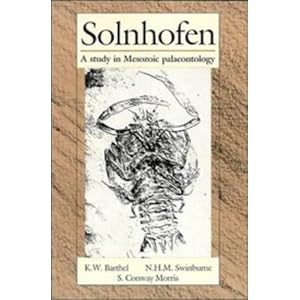
The formation has probably been known about for as long as humans have been in the region for its ability to split into thin sheets that are perfect for roofing [Image below and right is of a specimen of a Coelacanth Coccoderma nudum from the Solnhofen limeston by author at the Houston Musuem of Natural Science by author]. The Roman buildings in the region often incorporate pieces of the formation. Being a limestone, which dissolves easily in acid, it was eventually discovered that it could be used to make lithographic plates for art. During this time fossils had to have been discovered and eventually during the 1700s when science started to take off they were finally noticed. Fossils from the formation have now been scattered around the globe as they preserve beautifully the soft tissue of many of the organisms that lived in the region. The problem is that even though the area has been well known for a long time there has been very little published in English for an English speaking audience. That changed with the publication in 1990 of Solnhofen: A Study in Mesozoic Palaeontology by K.W. Barthel, N.H.M. Swinburne, and S. Conway Morris (Amazon page). This book will be the focus of this review, lets read the back cover.
The celebrated Solnhofen Limestone is among the most important fossil deposits because of its astonishing diversity of organisms, many exquisitely preserved. Marine and terrestrial creatures and plants, buried 150 million years ago in soft lagoonal muds, provide a unique glimpse into the true diversity of Jurassic life. Articulated skeletons are preserved, as well as some soft-bodied animals that otherwise would be too delicate to survive fossilisation. Among the highlights are superbly preserved jellyfish, crustaceans, squid, fish and flying reptiles. Perhaps most important of all is Archaeopteryx - the celebrated 'missing link' which has the skeleton of a dinosaur but is covered in feathers, revealing a crucial evolutionary transition between the reptiles and the birds. Solnhofen opens a window into a vanished world, and reveals the unexpected richness of a land and sea teeming with life.Overall I would say this book is an interesting read. I first started this book over a year ago when I was trying to figure out the basic geologic background to the area and I was struggling to find much published on the area in English. The geologic background in this book gave me a good starting point so I could find other English sources and eventually understand where the current state of understanding of the formation is. It does a really good job of this but if you don't have much of a geologic background you may want/need to study up before you get there. All of the sources are cited but it gets a little technical at times. I recently figured I should finish reading it, aka today I have been referring back to the geologic setting portions a lot recently, and finished off the summary of the fossil organisms present. This was interesting because without mentioning phylogenetics the majority of the organisms are organized phylogenetically, except for the last three on dinosaurs, pterosaurs, and birds.
This book is a revised and updated translation of Werner Barthel's classic work Solnhofen: Ein Blick in die Erdgeschichte. In revising the text, Nicola Swinburne and Simon Conway Morris have added a considerable amount of new material whilst preserving the spirit of the original book. This is an authoritative account of the geological history, palaeoecology, palaeoenvironment and fossil taxonomy of this classic location. Not only will it be of great interest to palaeontologists and evolutionary biologists, but it will also be of value to amateur collectors, natural historians and also those with an interest in the history of life.
Overall this book is easy to read and gives good background information on the formation and surrounding areas. It is a little dated so if this is your first foray into the geology of the area make sure you find some of the newer papers and catch up but this is a good starting point. If you do not have much of a geologic background it shouldn't be too hard to catch up but you will most likely need to do so before you get too far into the book or you will get left in the dust. I will end this post with an image I took of a the Thermopolis specimen of Archaeopteryx when it was on display at the Houston Museum of Natural Science (see post on this trip here).
Book Citation
BARTHEL, K. W., N. H. M. SWINBURNE, AND S. C. MORRIS. 1990. Solnhofen: A study in Mesozoic palaeontology. Cambridge University Press, Cambridge, ix, 236 p.
Book review page
Wednesday, July 14, 2010
Museum Visit #2
Yes I know I said that this one would be on the Museum of Texas Tech University but I haven't actually had the time to go through the museum yet so I will get back to that later.
So I was driving between San Antonio, TX and Baton Rouge, LA earlier this month. This drive is just a trip down I-10 which involves driving through Houston. So since I was driving through, and there was an exhibit that I wanted to see (more on that later), I decided I would stop at the Houston Museum of Natural Science.
This is a large museum with many different portions to their exhibit but since I only had a few hours to spare I decided to focus mostly on the paleontology oriented exhibits since that is more what interests me. The main paleontology hall you walk into the standard dinosaur hall. This is what you expect to see dinosaur wise from most, a T-Rex a type of sauropod a Quetzalcoatlus (this is an interesting cast that I will discuss later) and a handful of other dinosaurs, but is still put together very well. Around the outside of this exhibit hall the exhibit shows many different fossils from different time periods and the exhibits tend to make sure to show fossils from the state of Texas.
Continuing around the exhibit you do find some mammals including a cast of an early lemur like primate jaw from Wyoming. There is also a good discussion on the evolution of the horse. Overall this is what you would expect from a mammal exhibit from a major museum, it is interesting but doesn't bring in the crowds.
I walked quickly through the Wiess Energy Hall and then I made it to the second level of the museum and walked through the gem and mineral hall and the malacology exhibit but didn't focus on either of these three due to lack of time but they are worth checking out if you go there. While on the second floor I noticed that the cast of the Quetzalcoatlus had different colored bones. There were some that were a grey to black color and were smooth in texture while there were others that were brown and looked more realistic in their texture. My best guess of what these changes in color mean is that the brown bones are casts that represent what has actually been found of Quetzalcoatlus and the rest is what we might expect to find in the future.
I normally wouldn't say anything about the gift shop but I don't think that I have ever been in a museum gift shop that big or one that sold that much fancy stuff, not what you would normally expect.
The Houston Museum of Natural Science is a great trip and as I said if you are in Houston before the Archaeopteryx exhibit ends go for sure. Make sure you have some time to spend because there are many different things to see and do here that make the experience worth the trip.
Museum visits page
Subscribe to:
Posts (Atom)