As with the museum posts(page) it really don't make sense search wise to name my book review posts book review # so I am going to go to naming them the title of the book for simplicities sake. Now on to the review.
It was a typical day in the Late Jurassic (Tithonian to be specific) on a small island located in the Tethys Ocean on what is currently the Bavarian region of Germany. The climate was warm and dry and the sun was beaming down on the small bush sized plants that covered the island. Out over the sea a group of pterosaurs (for me I will say Rhamphorhynchus muensteri) caught fish that swam to close to the surface near the reef while the breath of some of the marine reptiles (e.g. ichthyosaurs) broke the surface on occasion. On shore small theropod dinosaurs poked around in the bushes hoping to find a lizard or insect that they may be able to eat. The young Archaeopteryx had watched this scene play out plenty of times but only recently away from the safety of her mother's nest but at least now she could fly, well at least short distances and her flight wasn't very powerful due to her sternal keel still being cartilage. Her black feathers glistened in the sunlight and as a curious Compsognathus got too close she snapped her toothed jaw at it and flew slightly higher out of grasp for the dinosaur. She of course was a dinosaur too but there was something special about her she also had a lot of features that made her look more bird like than dinosaur like except for her long tail and her toothed "beak", and she certainly wasn't the first dinosaur to look bird-like but she would become when discovered one of the most important. As she looked out over the sea toward the dark black clouds that had been approaching for a while now she realized she was hungry it had been a while since she ate after all. Something hit her on the head and then more and more she wasn't quite sure what this was after all it hadn't rained, at least not much, her entire life. The rain drops also disturbed a dragonfly nearby from the branch it was sitting on and she took off after it. As she closed in a strong gust of wind blew her out over the reef, this was further out to sea than she had ever been. She looked toward shore and then the wind picked up even more. 150 million years later, in 1861, a slab of limestone is split from a quarry in the Solnhofen formation and she would again see the light of a new day but the world would be completely different than the one she lived in but she too would change it greatly.
While that story is clearly fictional the idea behind it is the vast amount of information that we have learned about Archaeopteryx lithographica since the first one was discovered in 1861. While most of this knowledge has been out there for years the first time that I truly saw it all compiled in one place was in a book I just finished called Archaeopteryx: The Icon of Evolution by Dr. Peter Wellnhofer (someone really needs to update and expand on his Wikipedia page). In this book we are taken to Solnhofen where we learn about the limestone that Archaeopteryx was deposited in and how this helps understand the environment that this animal lived in. We then learn about the animal itself and Dr. Wellnhofer tries to fit it into a phylogenetic location which includes a discussion on the different views of how birds evolved as well as the evolution of flight. While there have only been a total of ten (well eleven but the most recent one hasn't been published on yet and was just found late in 2011) body specimens and one isolated feather found we know so much about this animal. Part of the reason is how complete the specimens are with most being nearly complete but what I think the main reason for the amount we know about the animal is the just sheer amount of research that has been done on the specimens since it was the first animal found that truly showed the evolution of organisms in action, in this case the evolution of dinosaurs to birds.
This book is exceptionally well written and that is due to the sheer amount of knowledge that Dr. Wellnhofer has on paleontology and in particular the Solnhofen region. If you want to learn about Archaeopteryx or if you want to learn about Solnhofen geology or if you just want a book with really really nice pictures of really amazing fossils this is the book for you. Detailed images of all 10 of the specimens are included including pictures taken using infrared which really helps show off a lot of the soft tissue preserved in the specimen. There is a detailed description of the genus in general as well as where it fits evolutionarily which includes a very through description of the origin of birds including the many hypothesis of what the evolved from, and he, logically, leans toward them evolving from theropod dinosaurs. There is also a brief overview of the different ideas of how flight and feathers evolved and a basic overview of known, as of 2009, Mesozoic bird species.
If there is one fault in the book it is that it is too detailed. At times I felt like I was dredging through scientific papers, this is part of the reason it took me so long to finish, so if you aren't an expert in the field or haven't spent a lot of time reading scientific papers on dinosaur and bird evolution you might struggle a bit through parts. Most of the book is easily readable and the parts that are technical can be skipped or skimmed over without missing the overall point or theme of the section so don't let the technical nature scare you off. The price might scare you off but it is worth it for all the knowledge contained within.
The only other problem is that the book is dated which should say something about how fast the science has come since 2009. This is really that much of a problem after all how was Dr. Wellnhofer supposed to know that since I started reading the book early last year that phylogenetic studies would say that Archaeopteryx is not a bird (Naish et al., 2011; Xu et al. 2011), although at least one study disagrees (Lee & Worthy, 2011), that the color of the feathers would be determined (Carney et al., 2012), and that an even earlier feathered dinosaur would be discovered (Liu et al., 2012) (I got the e-mail about that last one as I was working on this review). So I will forgive the book seemingly being slightly dated since there are so many new specimens found in the paleontology world every year, there have been several new Mesozoic birds found in the past year (e.g. Xu et al., 2011).
This book is very interesting and worth picking up. It is a handy reference for the currently known specimens as well as about the evolution of birds in general. Oh and did I mention it has very awesome pictures, yeah they are very pretty. I will leave you, again, with a picture of the one specimen of Archaeopteryx that I have seen, the Thermopolis specimen, it was a great experience.
Book citation
Wellnhofer, P. 2009. Archaeopteryx: The Icon of Evolution. Verlag Dr. Friedrich Pfeil, Munchen, 208p.
References
Lee, M. S. Y., & T. H. Worthy. 2011. Likelihood reinstates Archaeopteryx as a primitive bird. Biology Letters doi: 10.1098/rsbl.2011.0884.
Liu, Y.-Q., Kuang, H.-W., Jiang, X.-J., Peng, N., Xu, H., & Sun, H.-Y. 2012. Timing of the earliest known feathered dinosaurs and transitional pterosaurs older than the Jehol Biota. Palaeogeography, Palaeoclimatology, Palaeoecology doi: 10.1016/j.palaeo.2012.01.017.
Naish, D., Dyke, G., Cau, A., Escuillié, F. & Godefroit, P. 2011. A gigantic bird from the Upper Cretaceous of Central Asia. Biology Letters doi: 10.1098/rsbl.2011.0683 (I should note that there is some doubt if this is actually a bird anymore but that shouldn't change the phylogentic tree published within)
Xu, X., You, H., Du, K. & Han, F. 2011. An Archaeopteryx-like theropod from China and the origin of Avialae. Nature 475, 465-470.
Book review page
Showing posts with label Archaeopteryx. Show all posts
Thursday, February 2, 2012
Friday, September 30, 2011
Happy 150th Birthday Archaeopteryx
I was hoping to have the book Archaeopteryx: Icon of Evolution by Peter Wellnhofer finished by today but as life has gotten in the way I have not been able to do that, hmm maybe I should read not that I am feeling inspired...
150 years ago today (today being 30 September 2011 and 150 years ago being 30 September 1861) an article was published by Hermann von Meyer which while only being 2 paragraphs long the first of which said this [German from the H. v. Meyer (1861) and English translation from Wellnhofer (2009)]
Archaeopteryx is an amazing find and even if it isn't a true bird it represents more than that. The specimens showed transitions between animals it has the feathers and many of the body parts of a bird but they are not completely bird like, it also has long claws and the teeth of the dinosaurs. This showed that dinosaurs and birds were related and while Darwin never used it as an icon for evolution it truly is one. 150 years ago paleontology was still young and we were still trying to understand what we were looking at to find an animal with feathers and dinosaur traits then was amazing and never heard of, after all animals fit neatly into their groups. Today a feathered dinosaur gets its five minutes of fame, nope doesn't even get a full 15 anymore, and then disappears where only paleontologists seem to remember it. It is amazing to see how far we have come! So in honor of that I figured I would share some links to other sites celebrating the day, links to my posts on closely related subjects (if I find more I will post them and if you have anymore feel free to share them in the comments), and some of the pictures I took of one specimen of Archaeopteryx, the Thermopolis Specimen, I was lucky enough to see. Enjoy and do something to celebrate the amazing animal that became part of the scientific record today!
Links:
The Witmer Lab is celebrating by unveiling a webpage that will link to some of their fancy 3D pdfs so I will let you go to their announcement page.
David at History of Geology talks briefly about the first feather.
Dinosaur Tracking gets a rare guest post from the associate web editor for Smithsonian.com Brian Wolly on his recent trip to Munich and getting to see the, surprisingly nick-named, Munich Specimen
My Pages:
My visit to the Houston Museum of Natural Science in which I got to see the Thermopolis Specimen.
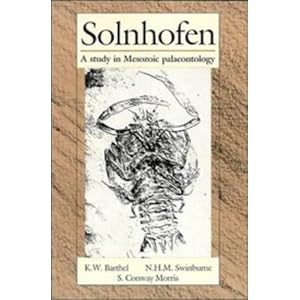
My book review on the book Solnhofen: A Study in Mesozoic Palaeontology by K.W. Barthel, N.H.M. Swinburne, and S. Conway Morris which is the locality from where all the Archaeopteryx specimens have been found.
Pictures (below the fold to speed up page loading and all images are by the author)
150 years ago today (today being 30 September 2011 and 150 years ago being 30 September 1861) an article was published by Hermann von Meyer which while only being 2 paragraphs long the first of which said this [German from the H. v. Meyer (1861) and English translation from Wellnhofer (2009)]
Nachtrüglich zu meinem Schreiben vom 15 verflossenen Monats Kann ich Ihuen nunmehr mittheilen, dass ich die Feder von Solenhofen nach allen Richtungen hin genau untersucht habe und dabei zu dem Ergebniss gekommen bin, dass sie eine wirklich Versteinerung des lithographischen Schiefers ist und vollkommen mit einer Vogel-Feder übereinstimmt. Zugleich erhalte ich von Herrn Obergerichtsrath Witte die Nachricht, dass das fast vollständige Skelet eines mit Federn bedeckten Thiers im lithographischen Schiefer gefunden worden sey. Von unseren lebenden Vögeln zeige es manche Abweichung. Die von mir untersuchie Feder werde ich mit genauer Abbildung veröffentlichen. Zur Bezeichnung des Thieres halte ich die Benennung Archaeopteryx lithographica geeignet.Obviously there has been some confusion if the feather should be the type specimen or the fossil of the whole animal, which would eventually become the London Specimen, but the ICZN has clarified it as the animal is the type specimen so no worries anymore.
[In addition to my letter of the 15th of last month I can now report that I have carefully studied the feather in all respects with the result that it is a real fossil from the lithographic shale and perfectly agrees with a bird's feather. Coincidentally I received a message from the "Obergerichtsrath" Witte that an almost complete skeleton of an animal covered with feathers was found in the lithographic shale. It showed several differences from living birds. The feather I had studied will be published along with a detailed description. For the name of the animal I consider Archaeopteryx lithographica as suitable.](emphasis mine)
Archaeopteryx is an amazing find and even if it isn't a true bird it represents more than that. The specimens showed transitions between animals it has the feathers and many of the body parts of a bird but they are not completely bird like, it also has long claws and the teeth of the dinosaurs. This showed that dinosaurs and birds were related and while Darwin never used it as an icon for evolution it truly is one. 150 years ago paleontology was still young and we were still trying to understand what we were looking at to find an animal with feathers and dinosaur traits then was amazing and never heard of, after all animals fit neatly into their groups. Today a feathered dinosaur gets its five minutes of fame, nope doesn't even get a full 15 anymore, and then disappears where only paleontologists seem to remember it. It is amazing to see how far we have come! So in honor of that I figured I would share some links to other sites celebrating the day, links to my posts on closely related subjects (if I find more I will post them and if you have anymore feel free to share them in the comments), and some of the pictures I took of one specimen of Archaeopteryx, the Thermopolis Specimen, I was lucky enough to see. Enjoy and do something to celebrate the amazing animal that became part of the scientific record today!
Links:
The Witmer Lab is celebrating by unveiling a webpage that will link to some of their fancy 3D pdfs so I will let you go to their announcement page.
David at History of Geology talks briefly about the first feather.
Dinosaur Tracking gets a rare guest post from the associate web editor for Smithsonian.com Brian Wolly on his recent trip to Munich and getting to see the, surprisingly nick-named, Munich Specimen
My Pages:
My visit to the Houston Museum of Natural Science in which I got to see the Thermopolis Specimen.
My book review on the book Solnhofen: A Study in Mesozoic Palaeontology by K.W. Barthel, N.H.M. Swinburne, and S. Conway Morris which is the locality from where all the Archaeopteryx specimens have been found.
Pictures (below the fold to speed up page loading and all images are by the author)
Sunday, February 27, 2011
Book Review #6
In 1859 when Charles Darwin first published The Origin of Species by Means of Natural Selection he knew that the keys to his theory would lie in the fossil record. In 1861 a fossil would be found that would lend huge credence to his evolutionary theory. This fossil would eventually be named Archaeopteryx lithographica, the name was originally just given to a feather but I will let this post flush out that problem, and would be come one of the most famous fossils in history. The fossil was found in rocks in the Bavarian region of southern Germany in a formation named after a small town known as Solnhofen. Since then the Solnhofen Formation (or Plattenkalk) is one of the most well known formations in the world famous for Archaeopteryx as well as several genera of pterosaur.
The formation has probably been known about for as long as humans have been in the region for its ability to split into thin sheets that are perfect for roofing [Image below and right is of a specimen of a Coelacanth Coccoderma nudum from the Solnhofen limeston by author at the Houston Musuem of Natural Science by author]. The Roman buildings in the region often incorporate pieces of the formation. Being a limestone, which dissolves easily in acid, it was eventually discovered that it could be used to make lithographic plates for art. During this time fossils had to have been discovered and eventually during the 1700s when science started to take off they were finally noticed. Fossils from the formation have now been scattered around the globe as they preserve beautifully the soft tissue of many of the organisms that lived in the region. The problem is that even though the area has been well known for a long time there has been very little published in English for an English speaking audience. That changed with the publication in 1990 of Solnhofen: A Study in Mesozoic Palaeontology by K.W. Barthel, N.H.M. Swinburne, and S. Conway Morris (Amazon page). This book will be the focus of this review, lets read the back cover.
The celebrated Solnhofen Limestone is among the most important fossil deposits because of its astonishing diversity of organisms, many exquisitely preserved. Marine and terrestrial creatures and plants, buried 150 million years ago in soft lagoonal muds, provide a unique glimpse into the true diversity of Jurassic life. Articulated skeletons are preserved, as well as some soft-bodied animals that otherwise would be too delicate to survive fossilisation. Among the highlights are superbly preserved jellyfish, crustaceans, squid, fish and flying reptiles. Perhaps most important of all is Archaeopteryx - the celebrated 'missing link' which has the skeleton of a dinosaur but is covered in feathers, revealing a crucial evolutionary transition between the reptiles and the birds. Solnhofen opens a window into a vanished world, and reveals the unexpected richness of a land and sea teeming with life.Overall I would say this book is an interesting read. I first started this book over a year ago when I was trying to figure out the basic geologic background to the area and I was struggling to find much published on the area in English. The geologic background in this book gave me a good starting point so I could find other English sources and eventually understand where the current state of understanding of the formation is. It does a really good job of this but if you don't have much of a geologic background you may want/need to study up before you get there. All of the sources are cited but it gets a little technical at times. I recently figured I should finish reading it, aka today I have been referring back to the geologic setting portions a lot recently, and finished off the summary of the fossil organisms present. This was interesting because without mentioning phylogenetics the majority of the organisms are organized phylogenetically, except for the last three on dinosaurs, pterosaurs, and birds.
This book is a revised and updated translation of Werner Barthel's classic work Solnhofen: Ein Blick in die Erdgeschichte. In revising the text, Nicola Swinburne and Simon Conway Morris have added a considerable amount of new material whilst preserving the spirit of the original book. This is an authoritative account of the geological history, palaeoecology, palaeoenvironment and fossil taxonomy of this classic location. Not only will it be of great interest to palaeontologists and evolutionary biologists, but it will also be of value to amateur collectors, natural historians and also those with an interest in the history of life.
Overall this book is easy to read and gives good background information on the formation and surrounding areas. It is a little dated so if this is your first foray into the geology of the area make sure you find some of the newer papers and catch up but this is a good starting point. If you do not have much of a geologic background it shouldn't be too hard to catch up but you will most likely need to do so before you get too far into the book or you will get left in the dust. I will end this post with an image I took of a the Thermopolis specimen of Archaeopteryx when it was on display at the Houston Museum of Natural Science (see post on this trip here).
Book Citation
BARTHEL, K. W., N. H. M. SWINBURNE, AND S. C. MORRIS. 1990. Solnhofen: A study in Mesozoic palaeontology. Cambridge University Press, Cambridge, ix, 236 p.
Book review page
Wednesday, July 14, 2010
Museum Visit #2
Yes I know I said that this one would be on the Museum of Texas Tech University but I haven't actually had the time to go through the museum yet so I will get back to that later.
So I was driving between San Antonio, TX and Baton Rouge, LA earlier this month. This drive is just a trip down I-10 which involves driving through Houston. So since I was driving through, and there was an exhibit that I wanted to see (more on that later), I decided I would stop at the Houston Museum of Natural Science.
This is a large museum with many different portions to their exhibit but since I only had a few hours to spare I decided to focus mostly on the paleontology oriented exhibits since that is more what interests me. The main paleontology hall you walk into the standard dinosaur hall. This is what you expect to see dinosaur wise from most, a T-Rex a type of sauropod a Quetzalcoatlus (this is an interesting cast that I will discuss later) and a handful of other dinosaurs, but is still put together very well. Around the outside of this exhibit hall the exhibit shows many different fossils from different time periods and the exhibits tend to make sure to show fossils from the state of Texas.
Continuing around the exhibit you do find some mammals including a cast of an early lemur like primate jaw from Wyoming. There is also a good discussion on the evolution of the horse. Overall this is what you would expect from a mammal exhibit from a major museum, it is interesting but doesn't bring in the crowds.
I walked quickly through the Wiess Energy Hall and then I made it to the second level of the museum and walked through the gem and mineral hall and the malacology exhibit but didn't focus on either of these three due to lack of time but they are worth checking out if you go there. While on the second floor I noticed that the cast of the Quetzalcoatlus had different colored bones. There were some that were a grey to black color and were smooth in texture while there were others that were brown and looked more realistic in their texture. My best guess of what these changes in color mean is that the brown bones are casts that represent what has actually been found of Quetzalcoatlus and the rest is what we might expect to find in the future.
I normally wouldn't say anything about the gift shop but I don't think that I have ever been in a museum gift shop that big or one that sold that much fancy stuff, not what you would normally expect.
The Houston Museum of Natural Science is a great trip and as I said if you are in Houston before the Archaeopteryx exhibit ends go for sure. Make sure you have some time to spend because there are many different things to see and do here that make the experience worth the trip.
Museum visits page
Subscribe to:
Posts (Atom)