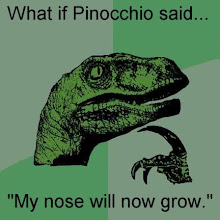
Stephen Colbert does it again not only does he not believe in climate change but he no longer believes in warming! This is why I watch the Colbert Report every night.
Wednesday, August 10, 2011


Argh/Fail!!!
So apparently my previous post got cut off at the bottom, due to an error in my coding, that will teach me to do my own HTML. Here is the rest of the post that got cut off, it isn't very much.
[...]While we were down there the group Yaguará was selling T-shirts whose proceeds went to them so they could purchase more equipment.I fixed the problem on the previous post if you want to see it in context, hopefully I can avoid doing this again.
As I mentioned earlier this is the last post in this series so I hope that you enjoyed it. If you didn't I'm sorry, I guess, but we will get back to normal posts, YouTube science videos and random comics with some actual though involving posts thrown in randomly, here shortly. As always feel free to leave comments in the comments below or send me a message!
Monday, August 8, 2011
Costa Rican Big Cats
So this will be the last post in this series but it is also the one I was looking forward to the most, but before I get into the meat of the post I want to add something to primarily the previous post in this series but it could also be added to the one before that.
How do I forget about fossils?
Well to put it simply it is because there aren't any. As I discussed in the previous post there is very little soil and if it isn't secured by roots it washes away quickly but I also mentioned that anything that dies in forest gets reused very quickly. For these reasons fossils are rare to nonexistent. You need to have sediment being laid down in order to preserve fossils and there are just too few areas in Costa Rica where this is occurring, although there are probably some I just don't know of any. This means that the fossil record for animals that lived and evolved in Costa Rica tends to be pretty sparse. That is not to say there isn't the potential for fossils to be found, after all the crew at the University of Florida have several sites in neighboring Panama where work is being done to widen the canal so who knows what the future holds.
Back on topic!
 The presence of big cats in Costa Rica should come as no surprise after all the Jaguar ranges from Mexico, rarely the U.S. Southwest, through most of South America. What actually surprised me was the presence of Pumas, or Mountain Lions/Cougars/etc, in Costa Rica because when I think of them I think of the Western U.S. My surprise aside, I was sad to hear that our second night there there was going to be a talk at the hotel about the big cats [photo at left of most likely Ocelot footprints, by author] in the region but we were already scheduled for another tour. After confirming that the people giving the talk would be back later we were relieved and so a few nights later my wife and I sat down for what would be a very interesting talk.
The talk was given by Aida Bustamante from the conservation group Yaguará. The group is trying to make sure that the big cats in Costa Rica continue to be protected and can flourish. The research that the group has done is impressive and Aida gave an interesting talk, my wife and I were glad to have gone and told her so afterward.
The group has been working to try to change people's minds about the big cats. They have approached this in a couple of ways. The first way is by putting out camera traps around the national park as well as at many of the ecolodges. The ecolodges protect their forests because they know that is what brings tourists to them when a big group of these are located near each other, like on the Osa Peninsula they allow for animals to cross vast expanses of land like they would have before humans started cutting down the forests. The Osa Peninsula has plentiful forests and the big cats love it this allows for the presence of ocelots and pumas as well as other large cats and hopefully the jaguars. Giving talks like the one I attended is a way to reach these tourists to help protect these areas.
 Another way they are trying to protect the cat is through community outreach. This is done in two main ways the first is giving talks, like the one I saw, to the community and let them know the cats are out there but they are not very likely to hurt people [Photo to right of footprints potentially of a Puma I am actually unsure but based on size and shape that is what my wife and I decided, by author]. This includes not just going to schools but going to people's homes an places of work to give the talks. The other way is by paying ranchers the cost of any livestock that is killed by the big cats. This prevents the ranchers from going out to kill the animal that killed their livestock in a hope to recoup some of the loss, something that ranchers even here in the U.S. do.
Evidence of big cats is everywhere on the Osa, as noted by the two photographs on this post, and the camera traps have captured evidence of all of the big cats including jaguars. The jaguars need vast expanses of territory to roam, however, so they cannot just be confined to the Osa. Evidence from camera traps suggest that they have traveled to another national park across the bay from where we were. This is a good sign but the possibility remains that they could eventually get cut off. Prior to the 2008 economic downturn there were plans in the work the keep the areas connected by forest and allow this forest to be part of a larger transnational forest that runs most of Central America down to South America. When everyone's economy crashed in 2008 this was put on hold. Now there is talk of the President of Costa Rica opening up forest land to mining and farming, this would obviously hurt the ranges of the big cats.
But there is hope! As I mentioned the big cats are traveling and this wasn't heard of until recently so this is good news. The number of cats seems to be increasing and their prey items so to also be seeing a rise which means there are likely to be more cats to prey on these animals.
I hope that by raising attention to this issue here someone outside will notice. I went to Costa Rica because of the rain forest. This area represents a wild that we don't get to see here in the U.S. or Europe and I would hate to see that changed. Dollars often speak louder than words and my dollars were spent on things that allowed me to see the wildlife while down there. Enough about me is there anything you can do to help? Well you can write the government down there and let them know if you have been, are going to, plan to, or just want to go to Costa Rica and let them know how you feel about this topic. You can also donate to Yaguará, also see here, or other organizations that are working on preserving the Costa Rican environments. While we were down there the group Yaguará was selling T-shirts whose proceeds went to them so they could purchase more equipment.
As I mentioned earlier this is the last post in this series so I hope that you enjoyed it. If you didn't I'm sorry, I guess, but we will get back to normal posts, YouTube science videos and random comics with some actual though involving posts thrown in randomly, here shortly. As always feel free to leave comments in the comments below or send me a message!
How do I forget about fossils?
Well to put it simply it is because there aren't any. As I discussed in the previous post there is very little soil and if it isn't secured by roots it washes away quickly but I also mentioned that anything that dies in forest gets reused very quickly. For these reasons fossils are rare to nonexistent. You need to have sediment being laid down in order to preserve fossils and there are just too few areas in Costa Rica where this is occurring, although there are probably some I just don't know of any. This means that the fossil record for animals that lived and evolved in Costa Rica tends to be pretty sparse. That is not to say there isn't the potential for fossils to be found, after all the crew at the University of Florida have several sites in neighboring Panama where work is being done to widen the canal so who knows what the future holds.
Back on topic!
The presence of big cats in Costa Rica should come as no surprise after all the Jaguar ranges from Mexico, rarely the U.S. Southwest, through most of South America. What actually surprised me was the presence of Pumas, or Mountain Lions/Cougars/etc, in Costa Rica because when I think of them I think of the Western U.S. My surprise aside, I was sad to hear that our second night there there was going to be a talk at the hotel about the big cats [photo at left of most likely Ocelot footprints, by author] in the region but we were already scheduled for another tour. After confirming that the people giving the talk would be back later we were relieved and so a few nights later my wife and I sat down for what would be a very interesting talk.
The talk was given by Aida Bustamante from the conservation group Yaguará. The group is trying to make sure that the big cats in Costa Rica continue to be protected and can flourish. The research that the group has done is impressive and Aida gave an interesting talk, my wife and I were glad to have gone and told her so afterward.
The group has been working to try to change people's minds about the big cats. They have approached this in a couple of ways. The first way is by putting out camera traps around the national park as well as at many of the ecolodges. The ecolodges protect their forests because they know that is what brings tourists to them when a big group of these are located near each other, like on the Osa Peninsula they allow for animals to cross vast expanses of land like they would have before humans started cutting down the forests. The Osa Peninsula has plentiful forests and the big cats love it this allows for the presence of ocelots and pumas as well as other large cats and hopefully the jaguars. Giving talks like the one I attended is a way to reach these tourists to help protect these areas.
Another way they are trying to protect the cat is through community outreach. This is done in two main ways the first is giving talks, like the one I saw, to the community and let them know the cats are out there but they are not very likely to hurt people [Photo to right of footprints potentially of a Puma I am actually unsure but based on size and shape that is what my wife and I decided, by author]. This includes not just going to schools but going to people's homes an places of work to give the talks. The other way is by paying ranchers the cost of any livestock that is killed by the big cats. This prevents the ranchers from going out to kill the animal that killed their livestock in a hope to recoup some of the loss, something that ranchers even here in the U.S. do.
Evidence of big cats is everywhere on the Osa, as noted by the two photographs on this post, and the camera traps have captured evidence of all of the big cats including jaguars. The jaguars need vast expanses of territory to roam, however, so they cannot just be confined to the Osa. Evidence from camera traps suggest that they have traveled to another national park across the bay from where we were. This is a good sign but the possibility remains that they could eventually get cut off. Prior to the 2008 economic downturn there were plans in the work the keep the areas connected by forest and allow this forest to be part of a larger transnational forest that runs most of Central America down to South America. When everyone's economy crashed in 2008 this was put on hold. Now there is talk of the President of Costa Rica opening up forest land to mining and farming, this would obviously hurt the ranges of the big cats.
But there is hope! As I mentioned the big cats are traveling and this wasn't heard of until recently so this is good news. The number of cats seems to be increasing and their prey items so to also be seeing a rise which means there are likely to be more cats to prey on these animals.
I hope that by raising attention to this issue here someone outside will notice. I went to Costa Rica because of the rain forest. This area represents a wild that we don't get to see here in the U.S. or Europe and I would hate to see that changed. Dollars often speak louder than words and my dollars were spent on things that allowed me to see the wildlife while down there. Enough about me is there anything you can do to help? Well you can write the government down there and let them know if you have been, are going to, plan to, or just want to go to Costa Rica and let them know how you feel about this topic. You can also donate to Yaguará, also see here, or other organizations that are working on preserving the Costa Rican environments. While we were down there the group Yaguará was selling T-shirts whose proceeds went to them so they could purchase more equipment.
As I mentioned earlier this is the last post in this series so I hope that you enjoyed it. If you didn't I'm sorry, I guess, but we will get back to normal posts, YouTube science videos and random comics with some actual though involving posts thrown in randomly, here shortly. As always feel free to leave comments in the comments below or send me a message!
Thursday, August 4, 2011
Conservation in Costa Rica
 This post is going to pick up where the previous Costa Rica post left off because it is important to understand. When most people think of rain forests like the ones that exist in Costa Rica they think of plentiful large plant life and lots of exotic animals. This often leads to the association of plants in more temperate areas that have extensive amounts of soil under them. Well what you should notice based on the picture to the left [photo of a root ball on a tree in Costa Rica by author, I could not find a more temperate forest root ball to compare it to so if you know of one feel free to post the link below] is that this is not true. The actual soil in most rain forests is typically very thin but why is this and what does this have to do with conservation?
Well the reason for this is due directly to the large amount of plants and animals along with the large amount of rain that occur in rain forests. When a dead organisms falls to the ground in a more temperate forest decay begins immediately but is slowed by a lower amount of rain and as one goes further north colder winter temperatures. In the rain forest you have warm humid climatic conditions year round, these are ideal conditions for decomposers so decomposition takes place very quickly. This means in order for plants and animals to get nutrients from decomposing organisms they must be able to do so quickly so this leads to a huge competition for these nutrients and with so many organisms competing for these nutrients the soil very quickly depletes the soil.
 Rain also effects the soil in any given environment. If a farmer clears land then it proceeds to rain the rain will wash away some of the soil. The same thing occurs in nature in forests as well. In a temperate forest the rain may wash away some of the soil but typically plants grow up in the thicker soil before the rain has a chance to wash it away and the plants help lock down the soil. In rain forests we have a perfect storm we have already thin soil and we have plentiful pretty much daily rain so before plants have a chance to start growing a lot of the soil is lost [photo at right of a dead crab, you can ignore this for this post on very depleted soil by author]. This leads to areas where the soil remains exposed we end up with typically iron and felsic rich soils. These soils do not have the nutrients that are needed to support plant life and do to the large amount of rain it is hard to get plants to regrow in these areas. So what does this mean?
This basically means that if we cut and burn and start trying to farm is these types of environments we lose most of the soil very quickly so we need more land. The land that had been farm land does not grow any plants anymore and continues to become more and more enriched in iron etc and gets more and more depleted in nutrients. This land eventually becomes almost rock like and will not grow plants so the farmers need more land so they slash and burn more land in the forest to be able to grow more crops, this is a big problem in places like Brazil.
Humans need food, however, so we need to do something. Well there are a couple ways to address this the first is that these countries could import food from countries that do not have similar problems. This is expensive, however, and leaves that country open to manipulation by foreign countries in exchange for food and as such is not preferable. The other main option is a crop rotation pattern. You could allow native plants to grow for a little while develop a more native soil pattern then cut it back and farm it for a couple of years then allow the forest to come back. This idea in and of itself isn't perfect and in the long run could prevent a country from growing enough food to support itself.
So which is best? I can't say and in fact their could be other options that I did not list here, feel free to put some in the comments section. It is important to note that in many parts of Costa Rica the locals have, however, taken advantage of the more natural way of growing food in many areas and if you stay try to stay at a ecolodge. These ecolodges typically produce their power and get food from sustainable sources which is good for Costa Rica and the world in general. The next post will also partially deal with conservation but in a slightly different way, as always I more than welcome your questions or comments below.
Wednesday, August 3, 2011
Fire Breathing Dinosaurs?
In Potholer54's continuing nominations for this year's Golden Crocoduck award he nominates the man who first popularized the idea about dinosaurs having too small nostrils...well just watch the video.
Artifical Sweeteners
I have been moving across the country so I have obviously failed at finishing my Costa Rica series and I have yet another National Park series post to write, but while I finish unpacking enjoy yet another great video by C0nc0rdance this time discussing the actual science behind artificial sweeteners and do they really give you cancer, as a diabetic I found this a helpful video (note: this video is 24 minutes long).
Monday, July 25, 2011
Energy Efficiency
Greenman3610 has a new video out showing that even if politicians don't want to believe it companies and private individuals have been slowly trying to become more efficient in their energy usage.
Tuesday, July 19, 2011
Geology of My Trip to Costa Rica

This article is a continuation of the series that I started a few days ago discussion several select topics in relation to my recent honeymoon to Costa Rica more specifically the Osa Peninsula. Now I am going to lead this article off by admitting that for the most part this topic seems to be under researched overall. There are a lot more personal observations in here than there are sources to peer reviewed published citations, which I am pretty upset about personally, so I do recommend you do your own research to find out more. I should point out that there are 3 sources (here, here, and here) that if I would have had access to them may have added some to the discussion here, so if you have read them feel free to post anything you know in the comments.
Overall Costa Rican Geology
The map at the top of the article was first published by the USGS in 1987. It has since been updated and digitized in 1996 by Paul G. Schruben, see larger version of the map here. So why am I using a map from 1987, the map is only a year younger than I am that should say something? Well the reason is that this is the only geologic map of the country that I could find so I am sure that it is slightly out of date. On another note here is the website for the Costa Rican Geological Survey.
Two things I notice right away just by looking at the map is that there is a lot of igneous rocks in the country and that there are not rocks visible on the surface that are older than the Jurassic. Both of these things exist for the same reason. When the continents first started rifting apart from the super continent of Pangaea North and South America were not connected, at least not in the same way they are today. This rifting because in the late Triassic/early Jurassic and the rates and directions of spreading varied in different parts of the Atlantic. This is why the oldest rocks are Jurassic in age. For millions of years the two Americas remained separated but eventually the Pacific Plate began to subduct under the North American Plate and the Caribbean Plate. This subduction caused more and more of Central America to be pushed up so for a bunch of volcanic islands to what we have in Costa Rica and Panama now, this initiated what is known as the Great American Interchange. According to discussions that I had while in country the Pacific Plate underwent a very shallow subduction this is what caused many of the volcanoes in the center of the country become dormant or extinct. These seems plausible but I don't know enough about the study in the area to be able to say for sure, I am going to admit here that Igneous and Metamorphic rocks were never my strong suit so I welcome anyone else to say if they know better.
Geology of the Osa Peninsula
 The Osa Peninsula and the Gulfo Dulce represent a very unique geologic set up compared to the rest of the country. A lot of travel brochures refer to Gulfo Dulce as a "tropical fjord" due to the great depth of the gulf and the steep drop-off to that depth as well as the surrounding land being mountainous. Fjord by definition cannot form in tropical environments because they need to be formed by glaciers, which this gulf was not, and they need to have more of a u-shape as well as having the mountain slopes forming right up to the edge of the water. But what explains the great depth?
This is actually a pretty simple answer the Osa Peninsula is composed primarily of basalt. Basalt is a rock that is typically associated with ocean floor rocks and differs from continental igneous rocks which tent to have more silica in them and as such are actually less dense than basaltic rocks. So the depth of the Gulfo Dulce is due to the fact that as the Pacific plate subducted under the Caribbean Plate the Osa Peninsula was pushed up on the Pacific plate side. So the gulf actually represents the spot where the Pacific plate is subducting and is just a continuation of the trench that runs along the Pacific coast of most of South and Central America. But why did the Osa Peninsula not subduct with the rest of the Pacific Plate?
A completely honest answer is that we (or maybe just I) don't know. This is one of the great things about science is that we can admit that but I can put through a couple of hypotheses that can eventually be tested. The first one is that the Osa Peninsula represents a spot where the Pacific plate has bent to such a high degree that it caused the Peninsula to be pushed up above water and eventually it will be subducted eventually. Now by itself I don't think this explains the Peninsula or we would expect to see a great many more islands like this following the boundary of the Pacific Plate. Another possibility is that for some reason the basalt that forms the rocks on the Osa Peninsula is less dense than the normal basalt. As I explained above silica rich rocks tend to be less dense than the basaltic rocks and running through the basalts visible on the beach were many many quartz seams. Quartz is made up of Silica and Oxygen and is a typical constituent of continental rocks, it is also the main constituent of most beach sands. This would have made the rocks less dense and more likely to but uplifted and less likely to be subducted which would cause the Osa Peninsula to stick up and eventually be accreted to the mainland of Central America. Now I will admit I like this last one better but it is honestly just a very basic hypothesis.
One more thing I hadn't noticed that there are supposed to be a lot of sedimentary rocks on the Osa Peninsula. Now while these break down before they can be seen on the surface and are likely just covering the basaltic rocks they aren't talked about much. Something you may notice in the picture that I posted at the start of this section is that yellow staining on the basaltic rocks, this picture was taken by the author and shows some of the rock visible on the Pacific side of the Osa Peninsula. Soil is thin in the area and most of these smaller streams don't carry much in the way of physical sediments what this yellow staining looked a lot like to me is travertine. This could be resulting from the few limestone rocks on the peninsula dissolving and the calcite reprecipitating on the rocks at the beach, if you want to know more about travertine look at my two posts on two of the caves in the National Park system, here and here. This post went far longer than I would have liked and there is another aspect I would like to cover that I can tie into another post so that is what I will try to do, also I should point out that I only just barely touched on some complicated topics so if you have any questions about any of that let me know. If you want to read a little bit more about this area geologically read this article from 2009 in Earth Magazine.
Saturday, July 16, 2011
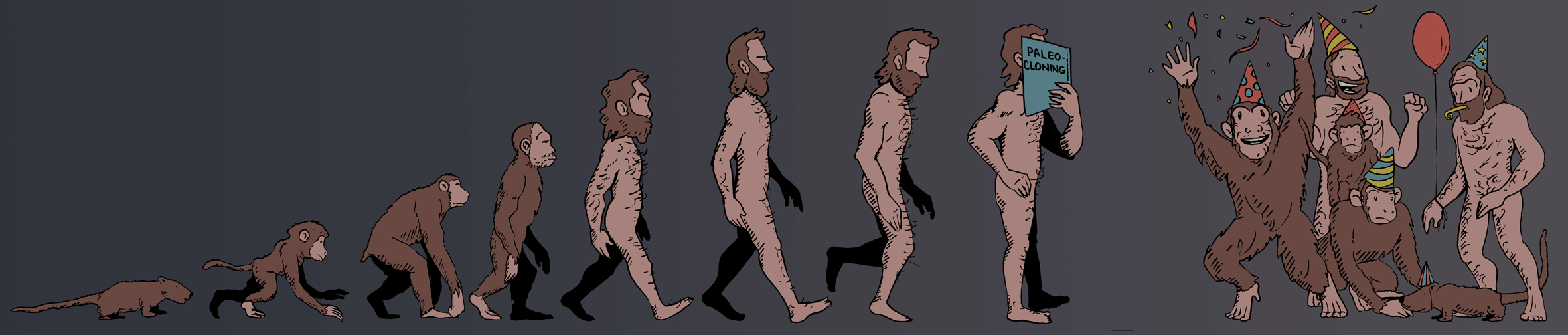
New Twist on a Famous Image
Although it isn't exactly accurate SMBC has a new take on the famous progress of evolution. Make sure you click on it to appreciate the image fully.

Cell Phones
I have discussed a few times in the past the cell phones cause cancer idea, including a small rant in this post, but I think xkcd has it right in their comic from yesterday.

Subscribe to:
Posts (Atom)